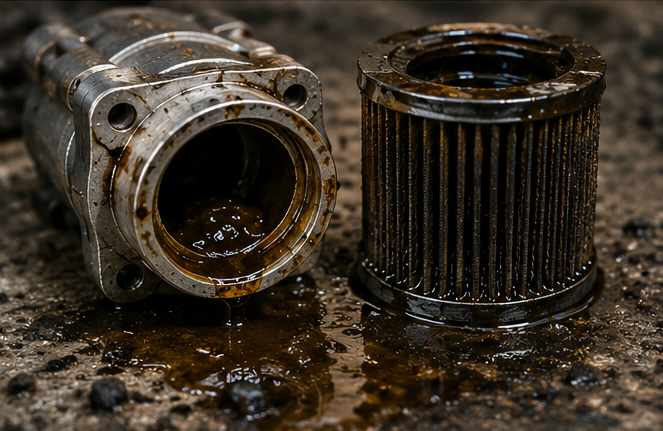
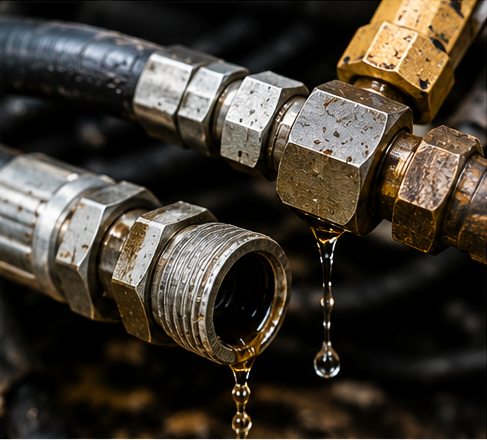
Contamination is often called the silent killer of hydraulic systems. Tiny particles of dirt, metal shavings, moisture, and other contaminants can circulate through the system, damaging hoses, connectors, seals, pumps, and valves.
Dirty hydraulic fluid increases friction and wear throughout the system. As contamination accumulates, efficiency declines and component life decreases. Even microscopic particles can create significant damage over time, especially in modern high-pressure hydraulic systems with tight tolerances.
Maintaining fluid cleanliness requires proper filtration, routine maintenance, and regular fluid analysis. Reservoirs should remain sealed whenever possible, and technicians should follow strict cleanliness procedures during repairs and fluid changes.
Organizations that prioritize contamination control often experience longer equipment life, reduced downtime, and lower maintenance costs. Clean hydraulic fluid remains one of the most cost-effective investments any equipment owner can make.






 2-Wire
 4-Wire
 6-Wire